
Kohn Writes About Copyright Decisions to Watch in 2024
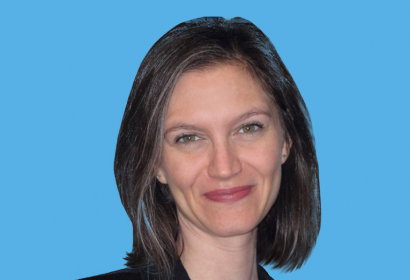
Pryor Cashman Partner Felicity Kohn, a member of the Litigation, Intellectual Property, and Media + Entertainment Groups, wrote an article for IP Watchdog discussing important copyright cases to watch and key decisions made in 2024.
In “Key Copyright Decisions So Far and Cases to Watch in 2024,” Felicity writes about Warner Chappell v. Nealy, which addresses timing rules for infringement damages:
In adjudicating this question in Nealy, the Supreme Court assumed without deciding that the discovery rule was valid. It then held that “a copyright owner possessing a timely claim for infringement is entitled to damages, no matter when the infringement occurred.” Id. at 1139. Under this holding, a copyright owner with a timely infringement claim under the discovery rule may recover all damages from a timely infringement claim, even if the infringement occurred far more than three years prior to the filing of the lawsuit.
She also looks at a few cases this year that dig into Fair Use following the impact of Warhol v. Goldsmith, including Sedlik v. von Drachenberg:
In the year since the Supreme Court decided Warhol v. Goldsmith, 598 U.S. 508 (2023), trial-level and appeals courts have grappled with applying the decision.
Sedlik v. von Drachenberg concerned whether a tattoo made by well-known tattoo artist Katherine von Drachenberg p/k/a Kat von D, based on the plaintiff’s photograph of Miles Davis, infringed that photograph. The case went to a jury, which ruled that Kat von D’s tattoo was not infringing because it was not substantially similar to the plaintiff’s Miles Davis portrait; the jury, therefore, did not reach the question of whether the tattoo itself was fair use. Case No. 2:21-cv-01102 (C.D. Cal.), Jan. 26, 2024. The jury did find that Kat von D’s social media posts featuring the tattoo were protected by fair use.
Lastly, Felicity discussed a key AI lawsuit’s effect on copyright infringement rulings:
This case continues to test whether claims other than those for direct copyright infringement based on training data may survive a motion to dismiss. To date, such claims have been largely unsuccessful. For instance, on February 12, 2024, the district court for the Northern District of California largely granted OpenAI’s motion to dismiss all claims brought by plaintiffs, a putative class of authors, except the one alleging direct copyright infringement. The court dismissed the vicarious infringement claim (based on the plaintiffs’ failure to allege substantial similarity between the outputs generated by ChatGPT and plaintiffs’ works), as well as the DMCA claims, with leave to amend (it permitted a portion of the unfair competition claim to proceed).
Read the full article using the link below.