First-of-Its-Kind Global Arbitration Court for Art Disputes Launching June 2018
On June 7, 2018, the Netherlands Arbitration Institute (NAI), in conjunction with The Hague-based Authentication in Art (AiA), will launch a new, specialized arbitration and mediation tribunal exclusively dedicated to resolving art law disputes. The “Court of Arbitration for Art” (CAfA), as the tribunal will be known, will conduct proceedings around the globe, addressing the full spectrum of art disputes, including authenticity, contract and chain of title disputes, copyright claims and more.
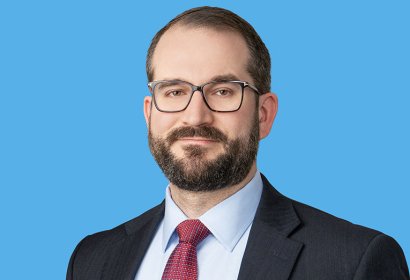
Conceived and advanced by William Charron, Co-Chair of Pryor Cashman's Art Law practice and an Advisory Board member of AiA, the CAfA was created to address the difficulty courts and juries often face when confronted with art law cases, where issues of forensic science, provenance research and connoisseurship are often at issue.
“In cases involving authenticity questions, the market need not – and often does not – accept a court’s finding that a work is, more likely than not, authentic or fake,” Charron explained. “The idea behind the CAfA was to ‘flatten the learning curve’ in these - and similar - kinds of cases by having experienced art lawyers be the deciders. Practitioners should be better equipped to understand and more properly weigh the evidence in a manner that the market will accept,” he said.
Charron formed a small working group of fellow lawyers in New York, including Luke Nikas from Quinn Emanuel Urquhart & Sullivan, LLP; Megan Noh from art law boutique Cahill Cossu Noh & Robinson LLP; and Judith Prowda from Stropheus Art Law and the Sotheby’s Institute of Art, to develop the CAfA and draft what have become the tribunal’s new codified rules (effective April 30, 2018).
The primary objective of the group’s work was to arrive at rules that would provide for both market legitimacy and decisional accuracy. “Everything we analyzed came back to the questions of whether this is something the market will likely accept, and whether this is something that best positions the tribunal to render the right results,” Prowda said.
A particularly unique facet of the CAfA is that the more traditional model of competing and advocating experts will not always apply. Although the parties will be free to retain their own testifying experts on many issues, in authenticity disputes the tribunal, not the parties, will appoint its own forensic and provenance experts from an internationally recognized pool. “The idea is to give the most comfort possible to the market that authenticity decisions are based on truly neutral expert analysis,” Nikas explained.
Another important aspect of the CAfA’s rules is that, while proceedings will be private and confidential, as with traditional ADR, the final arbitration decisions will be published and will identify the art at issue while maintaining the parties’ anonymity. “This was deemed essential to ensure market understanding and acceptance of the results,” Noh said.
The CAfA will be implemented under the auspices of NAI. While the arbitrations will be deemed “seated” in The Hague, proceedings can be conducted anywhere in the world and are enforceable under the New York Convention and other international conventions.
The newly-released CAfA arbitration rules can be viewed here.
More About Charron’s Practice
As co-chair of Pryor Cashman’s Art Law practice, William Charron represents clients on a range of authenticity, title and related matters. He frequently speaks and writes on issues impacting the art world, such as authenticity disputes, World War II restitution cases, artist royalty rights, and procedural law issues. He is a founding board member of the Professional Advisors to the International Art Market (PAIAM) in New York and a member of the New York City Bar Association’s Art Law Committee.
To learn more about his practice, please visit here.