William Charron Wins 2019 Burton Award for Distinguished Legal Writing
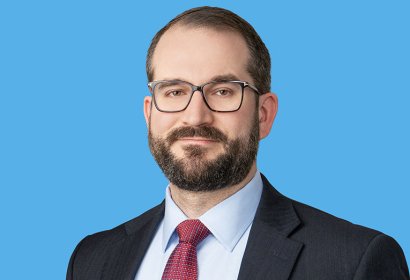
William Charron, co-leader of Pryor Cashman’s Art Law practice, will receive the 2019 Distinguished Legal Writing Award from The Burton Awards and Law360. This is Charron’s second Burton Award; he received his first in 2010.
Established to honor the finest accomplishments in law, including writing, reform and public service, the Burton Award is given to only 30 articles, chosen from nominations submitted by the country’s 1,000 largest law firms.
In his winning article, The Problem of Purely Procedural Preemption Presented by the Federal HEAR Act, Charron writes "the underlying purpose of the Holocaust Expropriated Art Recovery (HEAR) Act of 2016, which is to return Nazi-looted artwork to victims or their families, is undeniably laudable. It is equally clear that victims and their families can often face obstacles to gathering evidence from the war that would demonstrate Nazi theft in court. The HEAR Act strives to address these concerns by imposing a federal statute of limitations over all state law causes of action that would enable restitution of Nazi-stolen art."
Yet, in spite of the important needs the Act aims to serve, Charron argues that courts must hold that the HEAR Act violates the 10th Amendment and principles of federalism.
Click here to read the full article.
More About Charron’s Practice
William Charron is a litigator who co-leads Pryor Cashman’s Art Law practice. He represents institutional and individual clients in a wide range of art authenticity, title and other matters. Charron is a frequent speaker and writer on issues impacting the art world, such as authenticity disputes, World War II restitution cases, artist royalty rights, and procedural law issues.
Working in conjunction with the Netherlands Arbitration Institute (NAI) and the Authentication in Art (AiA) organization (where Charron serves as an Advisory Board member), he conceived of and formed a working group to design the newly-launched “Court of Arbitration for Art” (where he is now a board member), administered through NAI.
Learn more about his work and experience here.