Keep Your AI On The Ball: A Policyholder’s Guide To Artificial Intelligence Insurance Coverage
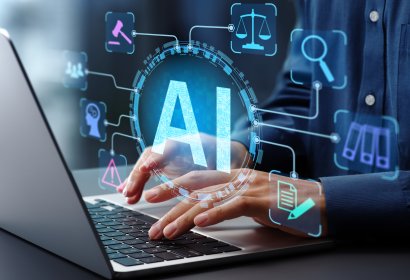
For the past several years, the insurance industry has been assuring corporate policyholders that Artificial Intelligence-related losses are covered under traditional insurance contracts.
But all that has changed in 2026. Since the start of this year, the industry has dramatically amplified its efforts to restrict AI coverage.
The leading provider of standard policy forms has begun issuing AI-specific exclusions: some limited; others absolute. And carriers are taking even more subtle steps to reduce their AI-related coverage obligations. In the face of this recent pivot, policyholders must remain vigilant if they hope to obtain insurance for AI-related losses.
When it comes to the integration of artificial intelligence into everyday business life, insurance carriers have been at the tip of the spear. Carriers have quickly adopted AI-based technologies to enhance their underwriting and claims handling capabilities.
And, in many cases, such enhancements have worked to the direct detriment of policyholders—making coverage harder to obtain, premiums higher, and payouts fewer and farther between.
Perhaps even worse, at the same time insurance carriers have recognized the essential role that AI is playing in today’s business world, they have been extremely slow in offering products to hedge against AI-related losses. In short, until now, most carriers have not viewed AI as stand-alone “peril” (think fire or hurricane), and, therefore, have not created AI-specific policies.
Instead, they have taken the position that standard form existing policies (e.g., commercial general liability; cyber; professional liability; directors and officers; etc.) are broad enough to protect corporate policyholders against the novel risks posed by AI adoption.
But change is afoot. In apparent recognition of the growing risks associated with the use of AI, the insurance industry is responding. And, unfortunately, the response is not to confirm and broaden coverage, but, rather, to deny and limit it.
Since the start of this year, the insurance industry has turned 180 degrees from its “traditional policies cover AI-related losses” position. The Insurance Services Office (ISO)—the dominant provider of standardized policy forms for property and casualty carriers nationwide—has begun issuing AI-specific exclusions.
Some are tailored, carving out particular categories of AI-generated loss while leaving minimal residual coverage intact. Others are absolute, stripping AI-related claims from the policy root and branch.
Contemporaneously, carriers are layering on subtler restrictions. They are doing so via application questionnaires, sub-limits, and endorsement language—which many policyholders will not notice until they file a claim.
The nationwide implications are dire. States like New York and California are home to a disproportionate share of financial institutions, media companies, and technology firms that are deploying generative AI at scale. And companies can very easily lose track of their AI implementation due to how ubiquitous the technology has become.
These are precisely the organizations most likely to face the first wave of AI-related claims, from intellectual property disputes over AI-generated content to regulatory actions arising from algorithmic decision-making.
These are also the policyholders most likely to discover, too late, that the coverage they assumed they had has been discreetly narrowed or eliminated altogether.
Anatomy of the Exclusions
Understanding what is happening requires a brief look at how insurance policy language typically evolves. Essentially, the ISO drafts standardized forms that most carriers adopt, in whole or in part, as the foundation of their commercial policies.
When the ISO rolls out a new exclusion, it doesn’t just affect one carrier’s book of business; it ripples across the entire market. The current wave of AI exclusions follows exactly this pattern.
The exclusions emerging in 2026 fall into four general categories. First, there are tailored exclusions, which target specific AI-related perils.
For instance, claims arising from content generated by large language models or losses attributable to autonomous AI decision-making. These exclusions require careful parsing, because the line between what is excluded and what remains covered is often drawn in very specific language that has not been tested in litigation.
Second, there are absolute exclusions. A typical “absolute” endorsement might bar loss on account of claims “based upon, arising out of, or attributable to the actual or alleged use, deployment, or development of AI by any person or entity.”
The breadth of such language is striking because, if enforced as written, it could arguably sweep in claims that have only a tangential connection to AI. For example, a product liability claim involving a physical product whose design was knowingly partially informed by AI modeling—or even a physical product whose design was unknowingly influenced by AI-based software.
Third, there are sub-limit-based “exclusions.” More subtle than the partial or absolute endorsements noted above, these provisions are typically marketed as a benefit. To wit: coverage specifically intended to respond to AI-related losses.
Although the prospect of dedicated coverage might have a superficial appeal, the available amounts actually represent only a tiny percentage of the basic policy limit. Thus, policyholders are almost always better served rejecting AI sub-limits in favor of the carriers’ erstwhile position that traditional policies cover AI-related losses at full value.
Fourth and finally, are the application-based “exclusions.” These essentially consist of document and information requests regarding AI usage that accompany policy purchases and/or renewals. The hidden danger here is that any misstatement—even an unintentional one—regarding a company’s use of AI can be cited by a carrier in an effort to void the resulting policy ab initio.
Policyholder Action Plan
The current environment demands a more aggressive and deliberate approach to AI insurance risk than most companies have taken to date. Policyholders should do the following:
Conduct a comprehensive policy audit. Every existing policy in the corporate insurance portfolio—CGL, professional liability, D&O, E&O, cyber, media liability, and any other potentially relevant line—should be reviewed with an eye toward AI-specific language.
The audit should focus on policy definitions, exclusions, endorsements, and sub-limits that could restrict coverage for losses related to artificial intelligence. Particular attention should be paid to changes at this year’s renewal, which is where many of the restrictions will begin to appear.
Pay close attention to applications. Often overlooked or rushed through, but equally important, is the policy application. As indicated immediately above, carriers are increasingly using the application process as a vehicle for managing AI exposure.
New questions about AI usage, AI governance policies, and AI vendor relationships are appearing in renewal applications across multiple lines. Policyholders must answer these questions carefully and completely, because an incomplete disclosure, even an inadvertent one, can derail an otherwise covered claim.
Evaluate emerging AI-specific insurance products. As traditional coverage narrows, a new market for AI-specific insurance is beginning to develop. Offerings can be tailored for entities that provide AI tools, as well as entities that merely utilize them. These policies are still maturing, and their terms vary significantly.
But they represent a potentially important supplement to a traditional insurance program, especially for companies with significant generative AI exposure.
Analyze specimen policies before purchase. No policyholder should bind coverage without first reviewing the actual policy form it will receive. Relying on a broker summary or carrier marketing materials is insufficient. Instead, specimen policies should be reviewed—ideally by insurance coverage counsel with in-depth knowledge of the claims process and insurance policy interpretation.
Final Thoughts
As generative AI has moved from experimental pilot programs to core business operations, the risk calculus has shifted. Insurance carriers are no longer content to wait and see whether traditional policies will be interpreted to cover AI losses; carriers are proactively rewriting the policies to ensure they do not.
Insurance consumers must take heed. Coverage is changing, and hoping for the best is not a viable strategy. Instead, corporate policyholders must keep their eye on the ball—especially at this year’s renewals.
--
This article first appeared in the October 5, 2026, edition of the “New York Law Journal” © 2026 ALM Global Properties, LLC. All rights reserved. Further duplication without permission is prohibited, contact 877-256-2472 or reprints@alm.com.