U.S. Citizenship and Immigration Services Seeks to Limit Green Card Application Filings Made Within the U.S.
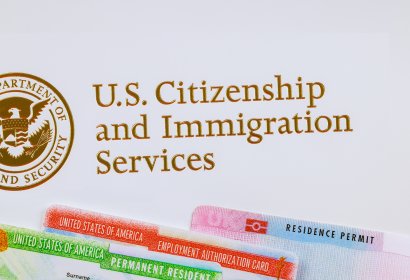
On May 22, 2026, United States Citizenship & Immigration Services (USCIS) abruptly announced a significant shift in policy in its approach to the way foreign nationals may apply for U.S. permanent residence (i.e., green cards). Most notably, the memo does not change existing statutes and regulations regarding the green card application process. Below, we provide an overview of what is changing, what is staying the same, and considerations for employers and green card applicants.
What is Changing for Green Card Applicants?
Decades of USCIS policy and day-to-day practice have permitted qualified applicants to obtain green cards without having to leave the United States in a process known as “Adjustment of Status” (“AOS”). AOS is an administrative process that avoids extensive travel and weeks away from employment. The benefits to the AOS process include, among other things, the ability to obtain employment and travel authorization while the green card application is pending.
The USCIS policy memo instead frames as the default pathway to permanent residence an alternate green card process, known as “consular processing.” Processing a green card application through a U.S. Consulate or Embassy abroad requires the applicant to depart the United States and obtain a final decision on the application through a personal interview before a Consular Officer. Applicants cannot obtain work or travel authorization while this process is ongoing and thus, may need to leave the U.S. during the pendency of the application while they wait for the final adjudication.
If the green card application is denied at a consular post, the decision of the officer may not be appealed.
The new default framework articulates USCIS’s position that more applicants for green cards should be required to leave the U.S. and obtain their green cards through consular processing.
What Has Not Changed Under the New Memo?
The memo does not change existing statutes or regulations. Thus, qualified applicants remain eligible to file Adjustment of Status applications within the U.S. and obtain the attendant benefits while the application is pending. USCIS Officers are not prohibited from approving AOS applications, though they are now required to review a number of additional factors before granting an approval.
New Considerations for Green Card Applicants and Employers
Employers and green card applicants should consider the individual merits of each case to determine whether the applicant may need to depart the U.S. at some time to complete the adjudication of their green card application.
The USCIS policy memo instructs USCIS officers to weigh both positive and negative factors and look at the entirety of an applicant’s background when determining whether a case will be granted “discretion” to be approved as an Adjustment of Status.
- Positive factors articulated in the memo include family ties in the United States; an applicant’s moral character; and national interest considerations, including applications that present an economic benefit to the U.S.
- Foreign nationals who are in the U.S. on “dual-intent” visas (i.e., H and L visas) may receive more positive discretion as well.
- Negative factors include prior immigration law or criminal violations or actions that appear to indicate that an applicant misrepresented the intent of their entry to the U.S. (for example, filing for permanent residence very shortly after entering the U.S. in a temporary status).
Additional guidance is likely forthcoming and legal challenges to the memo are also expected.
In the meantime, AOS applications may receive additional requests for evidence from USCIS, a request for an interview, or may be delayed as USCIS reviews the application.
Pryor Cashman continues to monitor evolving developments and will provide updates as further guidance becomes available. Pryor Cashman urges current applicants for Adjustment of Status, as well as those who may be considering applying for Adjustment of Status, to speak with immigration counsel to discuss how the new memo may affect case strategy.
--
Counsel Evan D. Hey and Associate Scott H. Schaefer were contributing authors to this client alert.